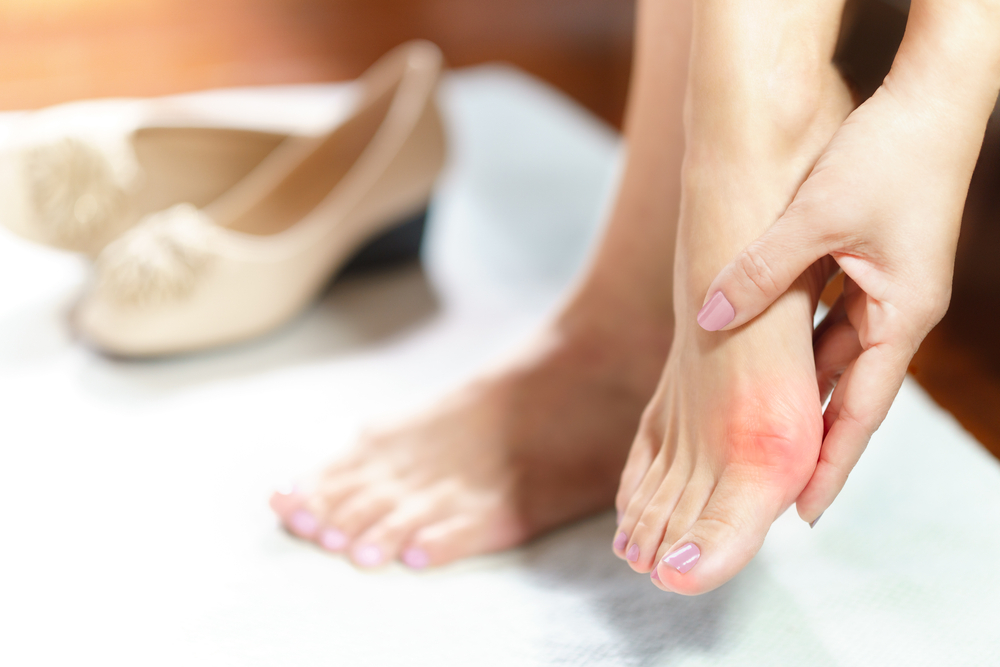
 A bunion ㅡ officially called hallux valgus ㅡ is a bump on the inside of the foot near your big toe joint. This bump is actually your bone protruding outward. Bunions can make you feel self-conscious about your feet, but left untreated, they can also cause pain when you walk.
Eric Blanson, DPM, and our team treat bunions here in Spring, Texas, at PMC Foot and Ankle Clinic. Below, Dr. Blanson highlights each type of bunion and our treatments.
1. Large bunion
If you have a large bunion, you may see a protruding bone mass near your big toe joint called metatarsophalangeal (MTP) joint. As the joint moves, the tip of your big toe may turn toward the second toe. Sometimes a large bunion makes it harder and harder to move your big toe.
Sometimes a bunion can develop bursitis, which is inflammation of bursae sac, and the big toe joint becomes irritated, red, and swollen.
2. Adolescent bunion
Adults aren’t the only ones who can experience the pain and discomfort of bunions. Teenagers may develop adolescent bunions, and these bunions can cause a deformity as well as pain, especially if they are left untreated.
Girls are three times more likely than boys to develop adolescent bunions at the base of their big toes. This is likely due to the increase in wearing high-heeled shoes during the teenage years. Boys aren’t immune to bunion development though. Any ill-fitting shoes can contribute to bunion growth. This includes tight or narrow shoes or footwear with a small toe box.
3. Tailor’s bunion
A tailor’s bunion affects the smallest toe, which is why this type of bunion is often called a bunionette. A tailor’s bunion is a bony growth on the fifth metatarsal bone. This type of bunion is less common, but tailor’s bunions can be red and painful, especially if they rub against your shoes.
Fun fact: Tailor’s bunions are named after tailors who would sit cross-legged, allowing their pinky toes to rub on the ground. Other causes of tailor’s bunions include wearing poorly-fitting shoes, having loose ligaments, having tight calf muscles, or having a low fifth metatarsal bone.
Treating your bunion
Regardless of which type of bunion you have, treatment is key to preventing future foot pain. Because the big toe joint plays a role in supporting and distributing your body weight while you stand, bunions can limit your ability to use your foot properly. Treatment reduces pain and improves the functionality of your foot.
The most common nonsurgical approaches for alleviating bunions include:
- Investing in good shoes
- Wearing custom orthotics to relieve pressure on your big toe joint
- Protecting your foot with bunion shields, night splints, or bunion pads/bandages
What are “good” shoes for bunions? Ditch the high heels and opt for supportive, well-fitting footwear. When selecting a pair of new shoes, look for a wide toe box, wide instep, and soft sole. Although pointed shoes may be trendy, it’s better to take a pass on them.
If you’re dealing with a bunion, contact our friendly office staff by phone today or schedule your appointment with Dr. Blanson online for convenience.